

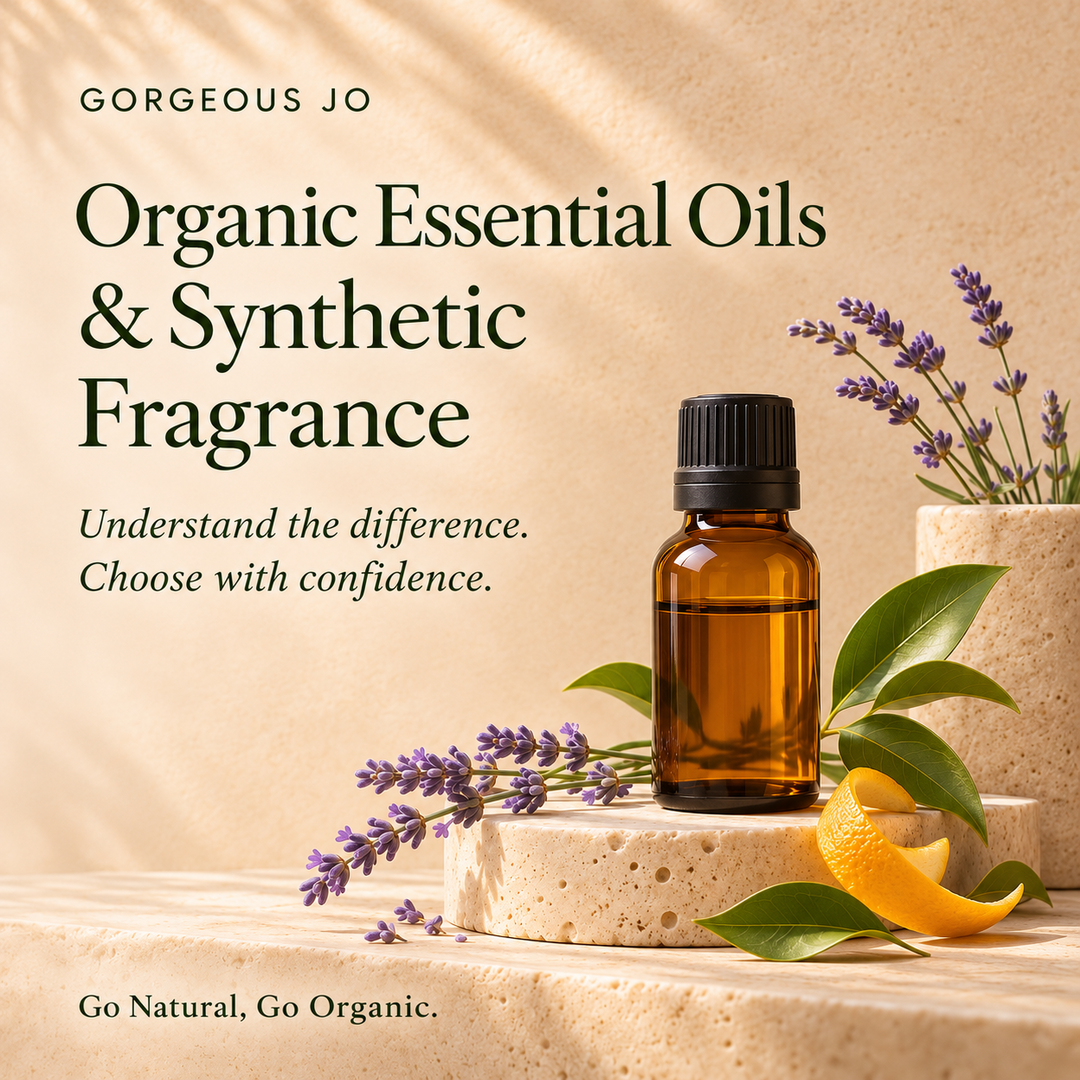
A beautiful scent can become part of your everyday ritual—a fresh aroma as you begin your morning, or a familiar fragrance as you unwind. But two oils that smell similar may have very different origins.
If you have wondered how USDA organic certified essential oils differ from synthetic fragrance oils, the answer starts with what is inside the bottle and how it was produced.

What are essential oils?
Essential oils are concentrated aromatic extracts from plants. Depending on the plant, they may come from flowers, leaves, peels, wood or other parts. Lavender and citrus are familiar examples.
Their appeal lies in the aromatic character of the plant itself. An essential oil contains a mixture of naturally occurring compounds, rather than simply one “lavender” or “orange” scent ingredient. [3]
However, plant-derived does not automatically mean certified organic. Organic certification is an additional, verifiable production standard.

What does USDA organic certification mean?
USDA organic certification means that a product meets the applicable requirements of the United States Department of Agriculture’s National Organic Program. Certification is carried out by a USDA-accredited certifying agent. Eligible oils must meet relevant production, handling, processing and labeling standards. [1]
Organic standards restrict the substances and methods that can be used. They prohibit genetic engineering and emphasize practices that protect soil and water quality and conserve biodiversity. Organic does not mean that no pesticides of any kind are ever used; only permitted inputs may be used under the standards. [2]
It is also worth looking closely at the wording on a label. A finished product certified organic is different from a product that simply contains a certified organic ingredient. An ingredient supplier’s certificate does not automatically certify the finished bottle or blend. [1]

What are synthetic fragrance oils?
Synthetic fragrance oils are scent formulations made using manufactured aromatic ingredients. They may recreate a familiar smell or create scents that cannot be obtained as an essential oil. Fragrance formulations can also combine synthetic ingredients with natural extracts, so not every fragrance oil is entirely synthetic. [3]
These oils are typically chosen to create a particular scent experience. A lavender-scented fragrance, for example, should not be assumed to contain lavender essential oil simply because it smells like lavender.

The differences at a glance
| Feature | USDA organic certified essential oil | Synthetic fragrance oil |
|---|---|---|
| Origin | Aromatic material extracted from plants | Formulated using manufactured aroma ingredients; some blends include natural ingredients |
| Organic verification | Meets applicable USDA organic standards through certification | Synthetic fragrance ingredients are not certified organic agricultural ingredients |
| Scent character | Reflects the botanical source | Designed to achieve a selected scent profile |
| Main appeal | Plant-derived aroma with verified organic production | A wide range of designed fragrance experiences |
| Safety | Concentrated; appropriate formulation and use matter | Appropriate formulation and use matter |
| Health claims | Organic certification does not prove therapeutic benefits | A pleasant fragrance does not prove therapeutic benefits |
Why choose USDA organic certified essential oils?
1. Greater confidence in the organic claim
Certification gives you a defined standard to look for, beyond a label that simply says “natural.” It provides independent oversight of the organic production and handling requirements. For shoppers who care about how ingredients are grown and processed, this is a meaningful difference. [1]
2. Support for organic agricultural practices
Choosing USDA organic certified essential oils supports farming practices that care for the soil, protect water quality and conserve biodiversity. These standards also minimize the use of synthetic materials, making organic sourcing a thoughtful choice for those who value how their botanical ingredients are grown. [2]

3. The aromatic character of real botanicals
If you love the scent of plant extracts, essential oils offer a direct connection to that botanical source. You can choose an oil for its distinctive aroma and the way it fits into your personal scent ritual.
This botanical origin is a feature of essential oils generally. Organic certification adds verified production standards; it does not automatically make the aroma stronger or more effective.
4. A choice that reflects your preferences
For people who prefer plant-derived aromas and certified organic sourcing, these oils can be a thoughtful fit. Choosing them is about knowing what matters to you: ingredient origin, organic verification and an aroma you enjoy.
Does natural always mean safer?
No. Both essential oils and fragrance ingredients can cause irritation or allergic reactions. Safety depends on the ingredients, concentration, formulation and how the product is used—not simply whether it is natural or synthetic. USDA organic certification is not a guarantee of safety or medical effectiveness. [3][4]
Always follow the product’s directions. Do not assume that a concentrated oil is ready to apply directly to skin, or that an oil intended for home fragrance is suitable for body use. Some citrus oils can also cause skin problems with sun exposure. [4]
How to choose with confidence
Look for a clear ingredient list, information about the botanical source and directions for the intended use. If organic certification matters to you, check which product the certification actually covers. For a blend, distinguish certification of individual ingredients from certification of the finished product.
Avoid judging an oil by scent alone. A beautiful fragrance tells you how it smells; product information and certification help tell you what you are buying.

A more considered scent ritual
USDA organic certified essential oils offer plant-derived aromas backed by defined organic production standards. Synthetic fragrance oils offer designed scent experiences. Understanding the difference helps you choose according to your preferences, with realistic expectations about both.
At Gorgeous Jo, we believe thoughtful self-care begins with informed choices. Explore our essential oil collection, discover the aromas you love, and read each product’s ingredient and usage information to find your fit.
Go Natural, Go Organic.
Images are illustrative and do not depict specific Gorgeous Jo products, suppliers or certified farms.


